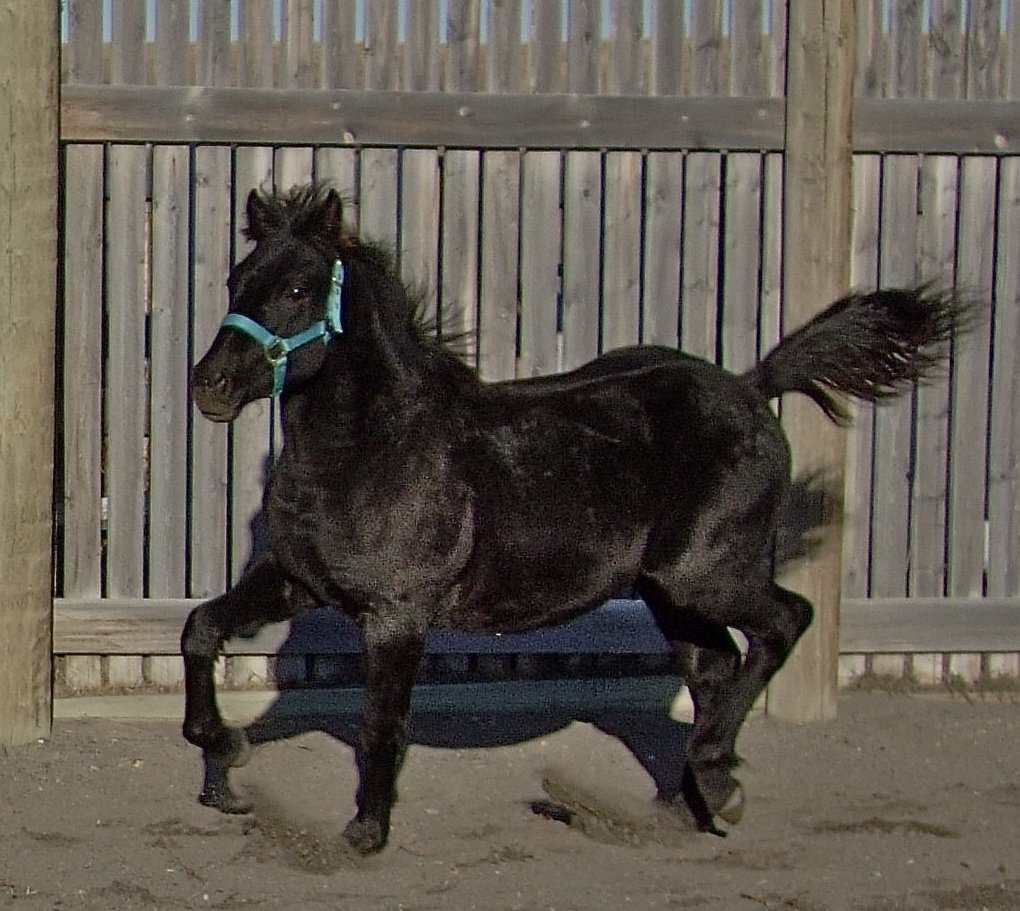
Zoe's Story

Thursday, 25 December 2014

3. Flicka's Journey - Hoof and Nutritional Care

Amanda cleaning the hoof and measuring temperature.
On Saturday, the stars aligned and my long term hoof care specialist, Bob Laye arrived right after Amanda Kroeker of ARK nutrition had started evaluating Flicka.  Check out her website: ARK Nutrition.  Amanda had been working with me since 2008 to manage my horses nutrition in as natural way as possible while also giving the herd as much freedom to forage and run in their river valley as possible. I watched the two specialists and just held my pony as they evaluated and shared knowledge of hoof care and nutrition . . .

The good news according to Amanda and Bob, is that Flicka had been self correcting with each “sugar rich laminitic episode”, her body was really trying to help itself despite the wrong diet, inconsistent of hoof care and lack of exercise over the last few years.  (Horses find high sugars in fresh spring grass, especially mid to late in the day during growing season, and they get it if their owner feeds them any grains such as oats and barley, hay with alfalfa in it, or gives them access to straw even for bedding.).  Amanda observed that fat was evenly deposited throughout the pony's body, with the obvious thick fatty deposit on the crest of the neck.  Founder yes, but no metabolic disorder which would manifest itself with odd fat deposits behind the shoulder and on the rump.
Nutritionist shares . . .
Hoof Care Specialist shares . . .
Although her kidneys were hard, and on the 1 - 9 condition scale where 9 is severely obese, Flicka scored 8; she was however, much to my relief, not a lost cause, (nowhere near a lost cause in fact, after I checked out some website  testimonials showing laminitis rehabilitation).
Bob recommends reading Australian researcher Chris Pollit's website.
http://www.laminitisresearch.org/chrispollitt_whatislaminitis.htm

Flicka's first 4 years were known to me.  Flicka was the special project of Catherine Thompson, a Long Rider who mentored with a talented lady in Saskatchewan learning all she could about natural hoof care and natural horsemanship. http://studiofiain.blogspot.ca/p/long-rider.html
I believe, because of 4 years of health and high quality care, the pony was able to show incredible resilience to the later years.

Flicka's front feet before the trim.
Right side (left front) done, it is so satisfying!
I am so happy to have my hoof care specialist and nutritionist finally meet!

A natural hoof care specialist can tell where the coffin bone is sitting by looking at the lateral grooves and studying the angle of the leg.  Bob had me walk Flicka so he could study her movement with the excessive hoof growth.  Shortly after, with Amanda looking over his shoulder, he got to work on the left front.  You could see the “white” lamellae stretched like “bubble gum” trying to keep the hoof wall attached.  It was separated, mild to medium severity founder; the coffin bone very close to the outer edge of the sole, and the angle so bad that Flicka was indeed walking on the tip toe of the coffin bone, her knees locked, her muscles adapted to an unnatural stance.  Another fortunate observation was noted, the feet were trying to mend, and while they had recently abscessed, they were presently cool in temperature.

Amanda uses an infrared sensor to measure the heat in each foot during an assessment.  She also reads the rings in the hoof wall like a forester reads the rings in a tree.  Horses naturally relax near her, they know she is there to make sure their hind gut is working, they are obtaining the correct micronutrients and mineral to support their workload, their health, and to correct any issues that have developed.


You can see the separated hoof filled with the white lamela stretched, about half an inch thick.

Wednesday, 17 December 2014

2. Flicka's Journey - Before Pictures.


Flicka arrives at the farm and I remind myself how horses live in the moment.  She has horse companions across a rail fence for now; a slow feeder with low sugar hay (I have to shake it to get rid of the part that is alfalfa in it.)  She finds plenty of water, a salt block and shelter from the wind.

Flicka arrives at the farm November 21, 2014


She is overweight and lonely, but already has friends!
 I remove the halter that had been on her for somewhat  too long.  I cry, remembering how amazing this little horse looked in 2011, and I cry with relief knowing that she now has a chance.  I only hope the situation can be turned around; then I cried with fear that perhaps I had waited to long to offer help.  It is in the dark barnyard, as Flicka is getting used to a new place, that I make a commitment to myself and the horses I love to start a Facebook Page for Flicka.


Slow feeders are great for weight loss but . . .
This is to encourage discussion on horse care and to open some eyes and perhaps influence more people to become passionate about providing reasonable and proper care for their horses, and help others to understand that it is something that is required if you are going to own a horse.

The slow feeder is great, but what this pony needs is to be accepted in the herd, and get out into the field for the winter.  There she will move, eat lots of fibre which low sugar sun cured grasses can provide all winter.  In fact, she will probably have to paw through the snow to find this natural source of food.  She also needs the herd to keep her happy and feeling safe.  Give me a day or so and we will make this happen.

By taking care of horses in your community, you take care of our larger horse industry; link global, act local.  The next night I remove burrs from Flicka’s mane and tail.  I cannot wait to get out to see her the next morning and my husband takes photos while I deworm her.  I deworm for bots (we just had the first major frost and cold snap), and worms, including tapeworm.  I learned that the fall is indeed also the best time to deworm for tapeworms since they usually reinfect in the spring, so that would give the horse a good 6 months being tapeworm free - nice!  In the early days, we did not even know horses could get tapeworms.  I have a good friend who told a story about tapeworm caused colic, that story has probably saved some of my horses. 

Deworming for everything!


I had made an emergency call to the best hoof care specialist.  I am fortunate to know him; he is the hoof care provider for my entire herd for 3 years now, along with my Long Rider friend Catherine.  As well, I sent a quick email to my herds’ nutritionist who was also scheduled for her yearly visit the next day.  Heads up; I have a laminitic horse I need assessed and a mineral ration for. 

I make a pact to myself, this pony is going to take extra care, at extra cost, and then will go into training in the spring at even more cost.  The budget for this is not coming out of my budget for my existing herd, they will all stay on their program.  I can do this, only because my husband and I have an incredible piece of native grassland, with willow shrubs, native grasses perfect for winter grazing, hills and a spring that flows year round.  It is the best winter pasture for my herd of Canadians and for a small pony, who, once her feet are trimmed and on the mend, and once she is dewormed and given a clean bill to be able to walk and run with a herd, needs plenty of fibre, mineral and companionship and movement to bring her back into reasonable condition.  If all goes according to plan, she will have the winter to lose weight, rehabilitate her feet and get in condition so she is ready for a trainer by the end of March in 2015.


 Copyright Windy Coulee Canadian Horses - Heidi Eijgel


Sunday, 7 December 2014

1. Flicka's Journey - A Rehabilitation Story

Flicka in 2011
Flicka’s Journey

In 2011 an amazingly athletic pony passed through our farm, her owner had to sell her, but she made a hasty choice and the 13 hand brown mare went to a new home with good intentions.

The pony had been a pack horse for hundreds of miles and was raised from day one using kind and effective natural horsemanship training methods, daily work, moving to increasingly difficult tasks and challenges in increments.  She was full of willingness, potential, impeccably conditioned and athletic; a well started four year old with superior ground work and experience as a pack horse but too small to make that her full time job.  She was ready to go into serious training for riding or driving; with a few years of consistent training, she had potential to be one of those amazing ponies that took care of their children and performed as ponies should in the most athletic style.

This Facebook Page has been started to support awareness of horse care.  Horses need the companionship of other horses, horses need to move and run; through domestication horses need to work with a human in an interspecies partnership which can have phenomenal results. Horses also need hoof care, nutrition, clean water, shelter, simple but regular vet care, safe and properly fitted tack for the jobs they do and these all have a cost.   After almost three years, this pony came to a place where the owner could make the tough decision that her dream was not coming true at that time, and the pony and owner needed some help.  Flicka arrived at our farm on November 20th, 2014.  While it was late, it ended up not ‘too late’ for this pony.  She did have laminitis (separation of hoof wall from the hoof and rotated coffin bones).  She was also lonely, depressed, in pain and obese.  I stepped in and offered help, not criticism, and was taken up on the offer.


Flicka - November 2014 - day one
I hope that hundreds of people “Friend” Flicka and share the opportunity with their horse Facebook Friends and potential horse owners to ensure that there is opportunity to learn some serious lessons from Flicka’s story.  It is a worthwhile educational journey to follow.  This story is for all horse owners selling their horses and for new equestrians wanting to be owners of horses, and even for those who just “dabble” and only want to enjoy watching and having a horse in their backyard. 

The goal of telling this story is to encourage more horse owners to make decisions fair to the horse, to have a plan and to follow it or be humane enough to get help if needed. Another goal is to document the rehabilitation of a horse through photos and story; giving people hope that horses can turn around from dire condition to fit and ready to get back to work with simple, effective nutrition, hoof care, movement, natural living conditions and training.  

In the long run, with knowledge and witness to small miracles, we can build capacity of knowledgeable horse owners and may well contribute towards the rebuilding and even reshaping of our Canadian horse industry. Dedicated, knowledgeable and honest horse owners support the vibrant equestrian community of the future. 

Flicka - November 2014 - day one; the hoof care specialist
and nutritionist are booked for the next day.


As well, this story will demonstrate how people can be fair to themselves and their family by being aware of what horses need to have a basic healthy life and what actually goes into training a horse to be safe enough for you and your children.  I hope this page will inspire horse owners to keep working to prevent neglect and abuse of horses. 


Flicka - November 2014 - day one

I want to share photos, stories, costs, trials and tribulations of bringing Flicka back to her healthy self both physically and mentally.  Then I would like to share what it takes to train a horse to be a safe and consistent mount or driving horse and eventually present her to the perfect home for a sweet, athletic, smart and fit pony.

This is a multi-year project and we are at day one.  There is much to discuss already. Please remember this blog is about healing.

 Copyright Windy Coulee Canadian Horses - Heidi Eijgel

Saturday, 4 January 2014

Horsework verses Housework - 10 tips for 2014


There is not enough time in the day to do everything we need to do.  The amount of time spent with the horses has indeed for some, surpassed the amount of time spent at work and sleep.  So, what has to give, to allow for a good amount of time say, 40 hours per week, to spend with the equines?  Well, there is cooking, but one can only get away with not cooking for so much time, then a certain disgruntled behaviour becomes apparent in the husband’s normally quite forgiving demeanour.  It is fair however to offer up a 50 percent increase in cooking time for a two person household (which is 50 percent of the standard 100 percent expected).  I also thought shopping can go, particularly the time saved from not shopping is significant as is the dollar amount. And of course, our farm location dictates no cell phone and internet, so there are two very easy time sinks - eliminated.  Reducing shopping, phone calls, internet and cooking significantly saves time, however, it is now apparent that something else has to be reduced; housework.  It actually is an easy choice; vacuuming the house every day, or spending that time with the horses. Hmmm, no brainer.

House work can easily be minimized if you support the following philosophies:

1. If you spend more time outside anyway, it only makes sense there should be less housework required.


2. If you don’t nag your husband to do any housecleaning, your husband should also not nag you to do so.

3. If you hang out with your friends outside, at the arena, at the clinic or out on the trail, the priority is to keep your trailer presentable and have a cooler full of snacks.

4. If you insist on a floor style in your house that camouflages the dirt.

5. If you come home from the arena after dark, you simply do not notice the dust.

6. Your windows are dirty because you need the birds to see the glass so they can avoid flying into it and the spider webs in the corners are left to catch the flies - a symbiotic relationship.

7. The cats/dogs will cover everything with hair again within in a few minutes if you clean the couch covers.

8. Having some germs around helps keep your immune system healthy.


9. If you reduce vacuum cleaning and drying clothes, you are conserving resources.

And finally, the # 10 philosophy of minimal housework is you are a superb time manager, and it is simply more important to have a fit and well groomed horse, clean tack, tidy barn, eat-off-the floor trailer, organized feed shed, than a clean house.


Horse cleaning is also more rewarding, not only is it very enjoyable to see your equines glisten in the sun, with “my little pony” style manes and tails;  several of my horses give me a back massage in return while I groom them.  The rewards of horse cleaning are obvious.  It is apparent that you follow the horsework over housework philosophy while out riding, or at a show because you hear people comment: wow, “look at your beautiful horse” or exclaim how fit and well trained your horse is.  In contrast, I have never ever heard this statement . . .   “look at that shiny clean floor, or your bathroom sink is, oh, so polished and germ free!”.

crazy cat photoEven cleaning horses hooves has its daily moments of pride because you have a sound horse as you ride out.  It takes only a few minutes to dig the dirt out of their hooves, yet how many folks have spent hours digging the dirt out of sinks, drains, door jambs, boot mats and window frames?  Have you ever had anyone, anyone at all, comment on the “dirt free” window frames in your house?  Now, show up with your horses' feet all polished at the Mane Event in Red Deer; and nearly every woman, child and man smiles when you walk your tidy steed with shiny feet down the aisle way towards their next performance.

My sheds are cleaner than my bathroom.  And frankly, that is just fine.  It makes more sense to hire a nice man and his bobcat to clean out the sheds. I wish he could do the same in the bathroom in the house, but the door is too narrow.  Once the muck is out, and composting, the horses happily munch on hay in their shed as the rain pounds down outside.  If the bathroom was cleaned more often, no one munches contentedly in the bathroom - so why overzealously clean this area?

In the end result, an exceptional time manager finds a way to keep their competition horses fit and trained, the equine equipment in superb order, the youngsters handled and doing their groundwork, the broodmares content, the whole herd healthy, the barn yard impeccably clean as well as making it appear that they also are well intentioned houseworkers as well.  This is possible with a few key points - never clean alone, always use a broom (it gets the big chunks) and encourage team work when doing housework.

Welcome to 2014; may we all spend more time with our horse work!

copyright  Windy Coulee Canadian Horses - Heidi Eijgel

Monday, 3 June 2013

New Foals at Windy Coulee, May 2013

Patricia was due May 8th, 2013.  It was worth the wait, but what a wait it was, she delivered a very healthy foal, a colt,around 1 am on May 31st!  I slept through the check and found them at 4 am, in the shed.  Patricia, the Drama Momma, is very proud, and has been standing with her head up scanning for anything that might come within a km or so from her pride and joy!  The colt is by Phenom, Julie's amazing little stallion.  But, this colt will be a big boy, long legged and is a gem, full of manners and kindness, like both his parents!

Patricia and her colt, May 31, 2013.  He was born around 1 am that morning!  His name will start with an "A" this year too!

Patricia and her colt
I love this photo, Patricia's colt is a handsome fellow with a lovely crescent moon on his forehead!

Patricia and her colt, day one.  


Quizie waited for me to come by on my regular barnyard check the morning of May 6th, she probably wondered what took me so long, I was there at 1:30 am, and she indicated she wanted to foal.  I went into the corral, comforted her and she laid down and had the foal right there.  She is a wonderful mare, and Suzanne, who I purchased her from last year, warned me, Quizie (Equiz) wants a person there when she foals!  This colt is by Dawn, Suzanne's proven stallion.  He is the full brother of our colt Zefyr!


Quizies' colt, born at 2 am May 6th

Quizie and her colt, in the small pasture in front of the house!

He is a sweet little guy, and his name will start with an "A" this year.

Thursday, 14 February 2013

Number 1.Take an Advocacy Role! Heidi's Top 10 Equine Stewardship Practises.

Heidi's Top 10 Stewardship Practises. I don't want to tell anyone what to do, or give out free "advice".  But, I do want to encourage responsible horsemen to think more deeply.  Many people do not think things through, and actually say or influence others with statements that are not accurate.  If horsemen took the time to think things through, they may act differently in some situations.  Perhaps, these practises which I strive to abide by, may help others develop their own top 10 stewardship practises. So, what does the responsible horsemen do to demonstrate stewardship?


Number 1. Take an Advocacy Role.  Support equine stewardship, discourage thoughtless human behaviour and neglect.  Take an advocacy role and write your government representatives to encourage stronger legislation for horse abusers;  find out what defines a criminal offence according to the law and report it to local authorities if you see it happening in your community.  Speak, write, tweet, blog and encourage dialogue for what is right.

I am a teacher.  I teach about nature with the hope that every child who has a wonderful experience in nature will respect, enjoy, and value it.  I hope that one day my students will teach others to do the same . . . and so on.  People who know the value of nature, work to make sure that wilderness on our planet will stay that way.  They know that natural ecosystems help sustain our human race and our culture.  It must be protected for this as well as its intrinsic beauty.  Millions of people are working towards this cause all over the world, in spite of it being an insurmountable task. One could quite easily give up, especially considering current events and the scale of the issues.


Encouraging stewardship of our equines is an easier task.  I believe many horse enthusiasts are mindful, respectful and caring of their equine partners; they are equine stewards.  I also believe that many horsemen take the time to care for their equine partners right till their end.  However, there is still work to be done.  Even equestrian federations advocate to support horse slaughter, because they believe the "borderline" horse owner would choose that if the other option was neglect.  Frankly, I am an advocate for encouraging equine stewardship, the very best care and understanding of our horses. The "borderliners", well, I hope to help them understand that they must care for the animals they are responsible for right to the end, and I advocate that neglecters should receive adequate punishment through the law.  

Equine stewards need to help our representative organizations, like our provincial equestrian federations know that we need to strive for the highest level of care and stewardship for our horses, and people need to know what that is.  Thinking that horse slaughter is a "good service"  and a kind end is misguided and does not qualify as stewardship. 


Becoming an advocate for equine stewardship and stewardship of the land draw from the same mind.  I find strength from the power of one ideology.  We can all make a difference, one person at a time.  We can all act professionally and compassionately and be the stewards our equine partners need us to be.  We can all teach, inspire and encourage others to make a difference.  All of us, acting individually act together.  We can take the time to make the right choices, take the extra time to do a good job of placing our horses in true homes, follow up, do our due diligence and prevent problems in the first place. 

Equine stewardship is demonstrated when we strive to excel in sport, care, communication, and demonstrate scientific and artistic thinking as equestrians - that is how we make connections with horses, develop partnerships, provide the leadership, direct the herd. Lets use these skills to improve our industry - encourage stewardship, make change.

Friday, 1 February 2013

Number 2 - Ride Your Horse! Heidi's Top 10 Equine Stewardship Practises.

Heidi's Top 10 Stewardship Practises. I don't want to tell anyone what to do, or give out free "advice".  But, I do want to encourage responsible horsemen to think more deeply.  Many people do not think things through, and actually say or influence others with statements that are not accurate.  If horsemen took the time to think things through, they may act differently in some situations.  Perhaps, these practises which I strive to abide by, may help others develop their own top 10 stewardship practises. So, what does the responsible horsemen do to demonstrate stewardship?

It might sound obvious, but key to being an equine steward, is riding your horse! You have to enjoy what you are doing to spend time doing it and spending quality time, creates the partnership we are striving for as stewards! 


I had a Willing Worker on Organic Farm guest a few years ago, who expressed her joy while she was riding.  She laughed and smiled much of the time spent with the horses. Laughing, when well timed and "with the right meaning" is good for the horses and everyone around.  As we all know, a smile takes fewer muscles than a frown.  Your face relaxes when you smile.  The horses respected her and performed.  I have adopted this practice and it works.


Have fun . . . be safe.  Get out there, compete, ride with friends, organize events, trail ride, show, photograph, train, practice, learn, teach, challenge and most of all, ride your horse, and don't forget to smile!